
By Michael S. Simon for the Beth Israel Green Team Task Force
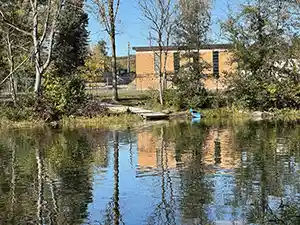 Tashlich was first introduced around the 13th century, performed on the first day of Rosh Hashanah as a means of casting off sin. The tradition involves proceeding to a moving body of water, preferably one containing fish, to symbolically cast off sins by tossing breadcrumbs in the water. The ceremony includes reading the last verses from the prophet Micah (7:19), “He will take us back in love; He will cover up our iniquities. You will cast all their sins into the depths of the sea.” The custom became widely popular despite objections from rabbis who feared superstitious people would believe that Tashlich, rather than the concerted effort of teshuvah, had the power to change their lives. Religious leaders were particularly opposed to the practice of throwing bread crumbs into the water as representing the casting off of sins.
While the concept of Tashlich has many beautiful aspects, including the symbolic ridding ourselves of our sins, a quiet reflexive walk, and the continuity of an ancient tradition, there are many potential problematic aspects. For one, it appears to be an “easy out,” thinking that we can rid ourselves of sins through a simple action. In other words, there is no direct association between tossing a breadcrumb and an action that will help to repair the world. Perhaps more importantly, there are adverse environmental aspects associated with Tashlich. While Tashlich is performed on a local level, we should consider the tens of thousands of sites for the ritual across the world. Breadcrumbs and other food waste do not belong in flowing water, not only harming the natural environment but creating unsafe food and/or eating habits for wildlife. Are we sending a message to our communities that for ritual purposes, it is okay to both throw waste into nature and to waste food?
A more sustainable Tashlich ritual might encompass the idea of a “Reverse Tashlich.” A simple answer is to just not throw food in the water, but to use a small stick or stone, or other natural object, as symbolic of tossing away one’s sins. A better metaphor for taking away sins is to remove “our” garbage (like our sins) or to protect God’s water domain. Our community can consider forming a post-holiday committee to clean up the river or the local park, or to make sure that there are no effluents from the synagogue grounds, such as inorganic fertilizer or pesticides. Our land is connected to the watershed. Any of these activities can be part of a holiday observance program and do not need to fall on the same day as the Chag. We should also think about water usage and try to avoid long showers, dishwasher vs. hand washing, use of “greywater” in gardens, lawns, or large expanses of green found in golf courses or in the lawn of our synagogue. We can consider constructing rain gardens or installing rain barrels at the synagogue or in our own homes. In the New Year, let’s work together to create a more sustainable world for our community and beyond.
Posted in the USCJ Digital Resource Library