
By Joseph McFarland
In late July, Jewish Family Services (JFS) received an urgent call: local garden crops were being cleared to make room for new projects. Guided by a core philosophy of recycling and upcycling (whether furniture, household items, clothing, or food), JFS stepped in. Dedicated staff converted flower beds around their main State Street office into vegetable plots, rescuing the plants to supply the Nourish Food Pantry.
 In the U.S., only 30% to 40% of food waste is recovered or redistributed, with the rest heading to landfills. Soaring grocery prices make fresh produce even harder to afford. JFS helps bridge this gap through food recovery, urban cultivation, and distribution via Nourish Nutritional Services, Meals on Wheels, and their growing garden initiative.
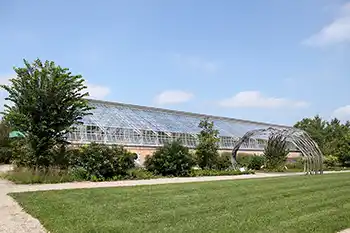
JFS currently manages two garden plots overseen by Program Manager Lizbeth Cortes and her team, who handle planting, maintenance, and distribution:
- Matthaei Botanical Gardens: Launched in 2021 from an idea by University of Michigan graduate Phimmasone Kym Owens, this Refugee Garden grows culturally appropriate produce requested by local ethnic groups.
- State Street Office Garden: Converted office grounds that supply fresh produce directly to pantry clients and provide plants for families to grow in their own home gardens.
Lizbeth emphasizes that fresh, locally grown food is vital for community health and accessibility. “Giving these plants a fighting chance to fill that gap in the community is extremely important,” Lizbeth noted, adding that staff have distributed numerous plants for clients to cultivate at home.
Managing the gardens requires months of strategic planning. Staff gather client requests early in the year, select crops suited to Michigan’s climate, and time plantings to ensure maturity by harvest. The team must constantly monitor sun exposure, soil fertility, seasonal timing, and pest protection. As seasons change, certain crops are moved into greenhouses to shield them from harsh weather and grazing animals.
Beyond immediate hunger relief, community gardens expand food education, encourage healthy eating, and strengthen food security in underserved neighborhoods. JFS plans to sustain both garden sites to foster long-term health and connection.
“We hope to continue to provide a space for healing and community building by resource sharing with our clients,” Lizbeth said.